
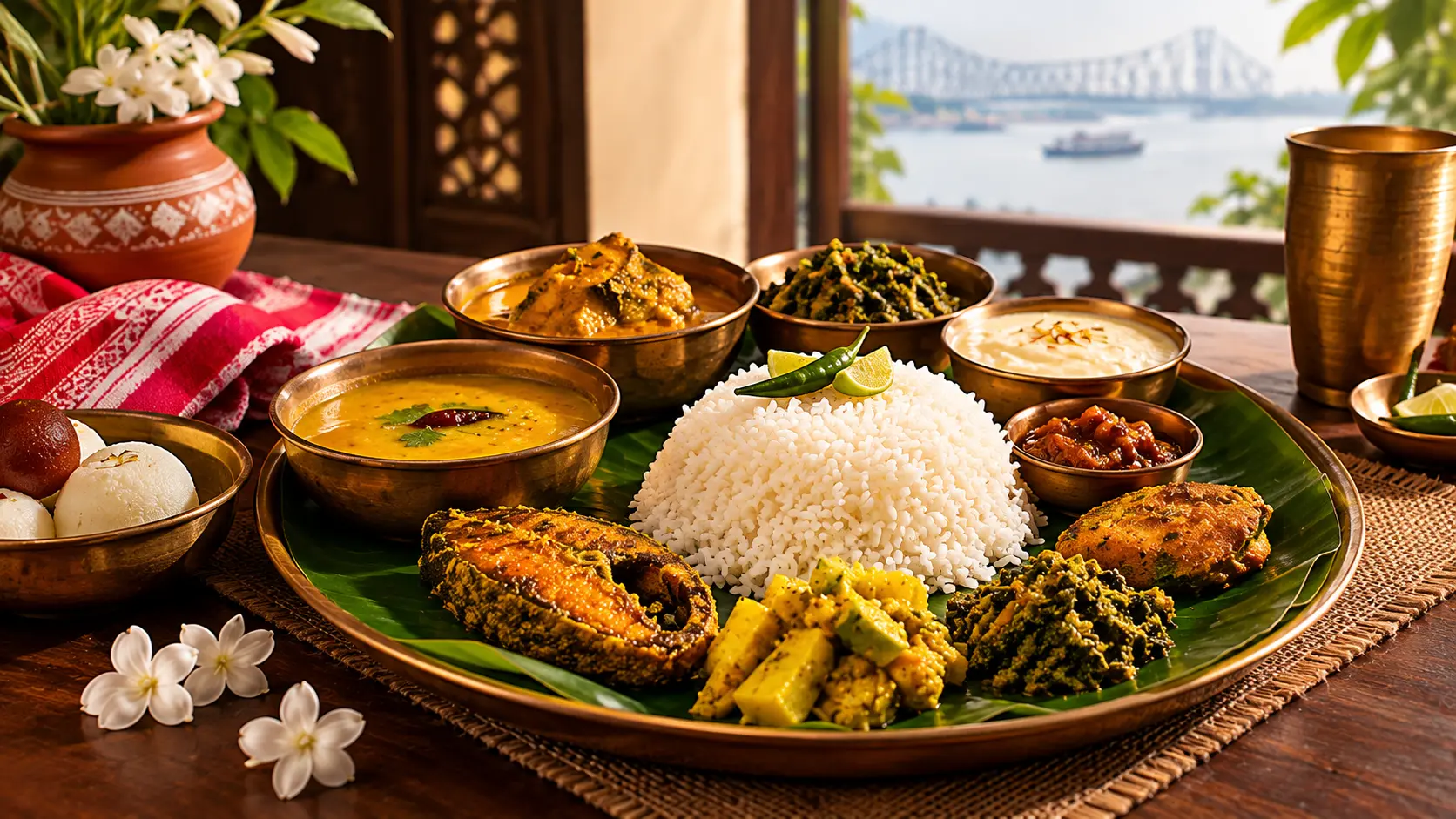
Traditional Bengali Food: The Dishes, Flavours and Memories Behind the Menu
Bengali food is often reduced to a list of famous dishes: Rosogolla. Machher jhol. Kosha mangsho. Mishti doi.
But Bengali cuisine is much more than its famous names. It is also about the order in which food is eaten, the season in which it appears, the occasion it belongs to and the memories attached to it.
A wedding meal is different from an everyday lunch. A winter menu is different from a summer one. Food served during a family celebration carries a different meaning from something cooked on an ordinary Tuesday.
That is what makes traditional Bengali food so interesting.
Traditional Bengali Dishes You Should Know
Shukto: the beginning of a meal
Shukto is a mixed vegetable preparation with a distinctive bitter note. It is often associated with the beginning of a traditional Bengali meal.
The bitterness is not an accident. It creates a particular opening to the meal before richer flavours follow.
Cholar dal
Cholar dal is a familiar Bengali celebration dish. Cooked with Bengal gram and often flavoured with coconut and whole spices, it pairs beautifully with luchi or kachuri.
It is simple enough to feel familiar and special enough to belong on a festive table.
Begun bhaja
Few dishes demonstrate Bengali simplicity better than begun bhaja. Thick slices of brinjal are seasoned and fried until soft inside and properly browned outside.
There is nowhere for poor cooking to hide. If the oil is excessive or the brinjal is undercooked, everyone notices.
Aloo posto
Potato and poppy seeds may sound like an uncomplicated combination. That is precisely the point.
Aloo posto is one of those dishes where the ingredients do not need to shout. The nutty flavour of posto and the softness of potato create a combination that has remained popular across generations.
Dhokar dalna
Made from lentils, shaped and cooked into a curry, dhokar dalna is an example of how Bengali vegetarian cooking can be deeply satisfying without relying on meat or fish.
It also shows how much variety exists within traditional Bengali vegetarian food.
Bhetki paturi
Bhetki paturi has become a familiar name in Bengali celebrations. Fish is wrapped with mustard-based seasoning, often in banana leaf, and cooked so that the aroma remains enclosed.
The leaf is part of the experience. Opening the parcel is almost as important as eating what is inside.
Shorshe ilish
Hilsa and mustard are among Bengal’s most recognisable food combinations. The preparation is simple in appearance but depends heavily on the quality of the fish and the balance of mustard.
For many Bengali families, ilish is inseparable from memory.
Chingri malaikari
Prawns cooked in a coconut-based gravy are a common choice for celebratory meals. It feels indulgent without needing an enormous list of ingredients.
That makes it particularly suited to special occasions.
Kosha mangsho
Kosha mangsho is one of the dishes people often remember long after a celebration. The meat is slowly cooked and browned until the gravy becomes thick and deeply flavoured.
The dish rewards patience. It is not something that benefits from being rushed.
Bengali pulao
Aromatic Bengali pulao brings a gentle sweetness to the plate. It works particularly well with rich meat and fish preparations.
The contrast matters. A menu full of heavy gravies needs something fragrant and balanced beside them.
Chutney
A Bengali meal often moves towards a sweet-tangy chutney before dessert. Tomato, mango and date-based chutneys are familiar examples.
It provides a change of flavour after the heavier main course.
Mishti doi
Mishti doi is perhaps one of the simplest Bengali desserts and one of the most recognisable. Sweetened yoghurt, properly set and chilled, is enough.
It does not need elaborate decoration.
Sandesh
Sandesh has endless variations. Plain, seasonal, soft, firm, flavoured with jaggery or fruit, it can change according to the occasion.
Its simplicity is part of its charm.
Payesh
Payesh is closely associated with celebration. Birthdays, milestones and family occasions often bring it to the table.
For many people, its importance is emotional as much as culinary. It is the taste of being celebrated at home.
Why traditional Bengali food survives
Food traditions survive when they remain connected to people. A dish may remind someone of a grandmother. Another may bring back a childhood wedding. A particular sweet may mean winter. A fish preparation may remind someone of a family home that no longer exists.
That is why traditional Bengali food continues to appear even as menus become more contemporary. The dishes may change slightly. The presentation may change. But the memory remains.
Traditional does not mean frozen in time
Bengali cuisine has always evolved. Ingredients change. Families travel. People move between cities. Restaurants introduce new ideas. Home cooks adapt recipes.
So there is no contradiction in serving traditional Bengali food alongside newer dishes. What matters is retaining the character of the food rather than treating tradition as decoration.
Planning a Bengali menu for your wedding or family celebration?
Explore what Initiative Caterer can offer for your occasion.
Frequently Asked Questions
What are some traditional Bengali dishes?
Shukto, cholar dal, begun bhaja, aloo posto, dhokar dalna, bhetki paturi, shorshe ilish, chingri malaikari, kosha mangsho, Bengali pulao, chutney, mishti doi and payesh are among the familiar examples.
What food is traditionally served at a Bengali wedding?
Wedding menus often combine vegetarian dishes, fish, seafood, meat, rice, chutney and Bengali sweets. The exact combination varies between families and occasions.
Why is Bengali food known for fish and sweets?
Fish has long been important in Bengali cuisine, while Bengal has developed a particularly rich tradition of milk- and chhana-based sweets. But Bengali cuisine extends far beyond these two categories.
Ready to serve a traditional Bengali menu at your next event?
From wedding feasts to family celebrations, let the right caterer bring authentic flavours to your table.